We follow a day in the life of three CPT agents who are trying to revitalize residents of Praialta Piranheira, where extractivist leaders were killed in 2011. The trio has traveled through southeastern Pará introducing agroforestry systems as an alternative to cattle ranching and deforestation
“To Hold Up the Sky” is a series of reports that investigates and maps productive initiatives and ways of life of indigenous peoples, quilombolas and other traditional and peasants communities. In our investigations, we explain how these peoples’ contribution to the environment is part of something broader and that these ways of life are not systemic alternatives, but systemic solutions, which need to be central to the actions of government and society to reverse climate collapse.
It’s drizzling steadily. We are on the PA-150, the highway that connects the city of Marabá in Pará to the Greater Belém region, in the Amazon region. They are in a white pickup truck with its bed loaded with açaí seedlings, a native Amazonian plant that once grew abundantly in these lands.
On board the vehicle, two men are talking. The younger one, in his twenties, wears a burgundy sweater, beige pants, and boots. He has a calm, soothing temperament. He would make a good diplomat. The older one, in his forties, wears a blue polo shirt, jeans, and boots. He has that kind of magnetic charisma of a person who can fill a room just by speaking.
The combination of their two personalities comes in handy in the work they carry out at the Comissão Pastoral da Terra (CPT). In recent years, the task of Francisco Alves de Souza, the older one known as Chiquinho, and Lucas Gomes, the younger one, has been to present small-scale farmers with alternatives to cattle ranching in a region proud of having been “cleared” by the ox’s hoof.
The obsession with cattle is present throughout the journey: at farm gates, with representations carved into wood or life-sized plastic reproductions as in a cow parade style; on Eletronorte’s transmission lines, which alternate structures representing oxen (with raised ears and earrings) with others representing cows (with drooping little ears). But it is, above all, in people’s minds.
In Nova Ipixuna, a town in Pará 60 kilometers from Marabá, where the white pickup turns left onto a dirt road, the situation looks no different. Our destination is the Projeto de Assentamento Agroextrativista Praialta Piranheira (the Praialta Piranheira Agro-Extractivist Settlement Project), where things are pretty much the same. But there is hope that they might change.
One last attempt
From the car window, pastures roll by one after another. Now and then, an ox or two shows up as if to give meaning to the landscape. “ See that tree over there? It’s a Brazil nut tree,” points out Geuza Morgado, who has been a CPT agent for 31 years and is traveling with us. She’s the last member of the team along with Lucas and Chiquinho and she’s the one holding the conductor’s baton. She tells me the visit to Praialta Piranheira is one last attempt to reorganize the settlers.
“Dona Maria was a wonderful person. She devoted her time and her life to the people of this community. She would seek public policies, run around, organize the women, provide training…” she recalls. Dona Maria, in this case, is Maria Espírito Santo, an extractivist leader who was murdered in the settlement in 2011 along with her partner, José Cláudio Ribeiro.
There are currently six types of land reform settlements in Brazil. The agro-extractivist settlement is one of them. First mentioned by the Instituto Nacional de Colonização e Reforma Agrária (the National Institute for Colonization and Land Reform) (Incra) in a 1987 document, this type provides for the ecologically sustainable use of the territory.
The history of these settlements is directly linked to another murder: that of the rubber tapper Chico Mendes in 1988. With the worldwide impact of his death, the government was pressured to take action. Thus, the agro-extractivist settlements were created in 1996.
Established in 1997 and spanning 22,000 hectares, the Praialta Piranheira settlement faced pressure from loggers who had their eyes on the settlement’s trees. Meanwhile, Maria and Zé Cláudio were organizing a cooperative for andiroba and Brazil nuts extraction and processing, in an attempt to generate income for the community while keeping the forest standing. “And that was Zé Cláudio and Dona Maria’s fight: to put a stop to deforestation, because this was a settlement project where that shouldn’t happen. But they ended up alone. Much of the community, if not the majority, was against them defending the forest. And because of that, the two of them lost their lives.” says Geuza.
With the death of the leaders of Praialta Piranheira, many settlers sold a large part, if not all, of the timber from their plots without much difficulty. “And they continued to live the same way, or perhaps worse,” says the CPT agent.
The new president of the union
The story ends at the moment we arrive at a person’s home who sparked a glimmer of hope in the Comissão Pastoral da Terra team: the farmer Maria Nilza Oliveira Lopes, president of the Sindicato dos Trabalhadores Rurais de Nova Ipixuna (Nova Ipixuna Rural Workers’ Union) since January 2024. “This is the first board of this union led by a woman,” adds Geuza, with a smile on her face.
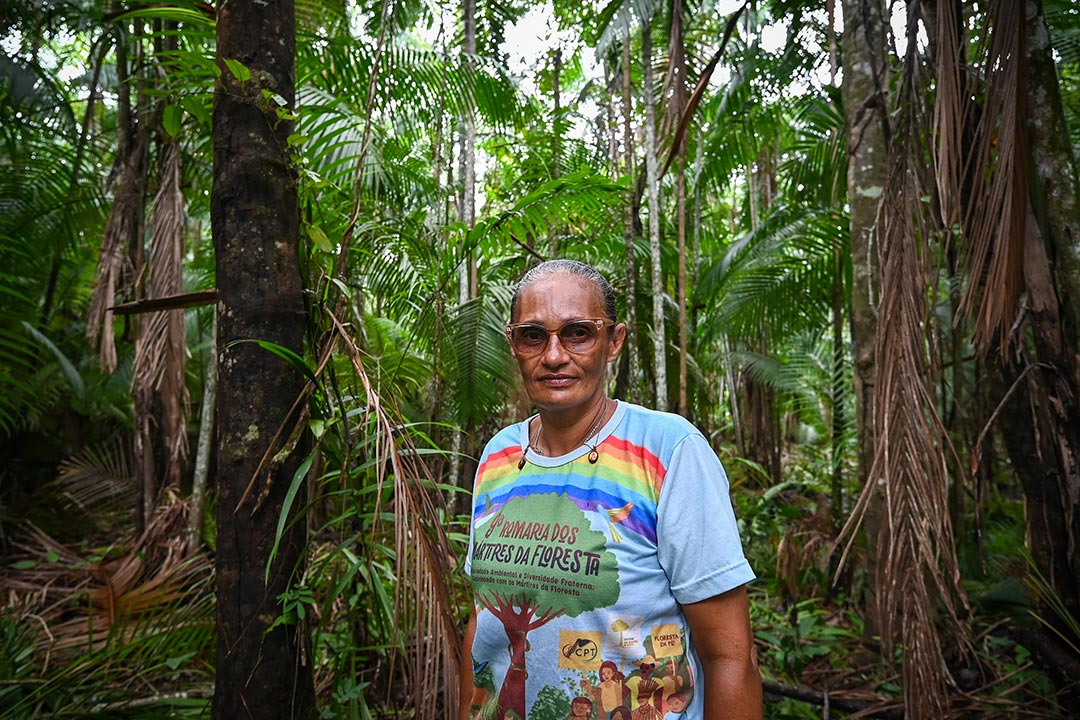
At 49, Nilza has a tall and serious presence. She welcomes us with lunch cooking on the stove. While the food is being prepared, we talk about what happened to the settlement and what its future might hold. “The logger was selective. He took the tree that was useful at the moment, then came back and took another. They cut down what remained and turned into charcoal. And then they planted pasture for cattle raising,” she contextualizes.
Praialta Piranheira is yet another of many examples of the cycle of Amazon devastation: first, the timber is cut down. Then pastures are established where, most of the time, very low-productivity cattle ranching takes place. Next, people wait for public infrastructure to arrive and sell the land for a profit. Or, as in the case of Nilza’s neighbors, due to a lack of alternatives.
“After that, many of them were sold, right? People give up, move to the city, and end up in a sad situation. Some managed to buy a house, others didn’t even manage that. They have no education, no job. So it is really difficult,” she observes.
“I’m in this fight, sister. Looking for partnerships so that these farmers won’t sell, won’t continue deforesting. And so that in areas where we’ve already made the mistake of deforesting, it’s possible to reforest,” she says calmly, while shelling the beans that will be cooked for the next day’s lunch.
Nilza and Pedro, her partner, have a plot in one of the settlement’s seven sections, Tracuá. Before being incorporated into Praialta Piranheira, the area was a farm, with both deforested and preserved areas. Their 30-hectare plot has a bit of both.
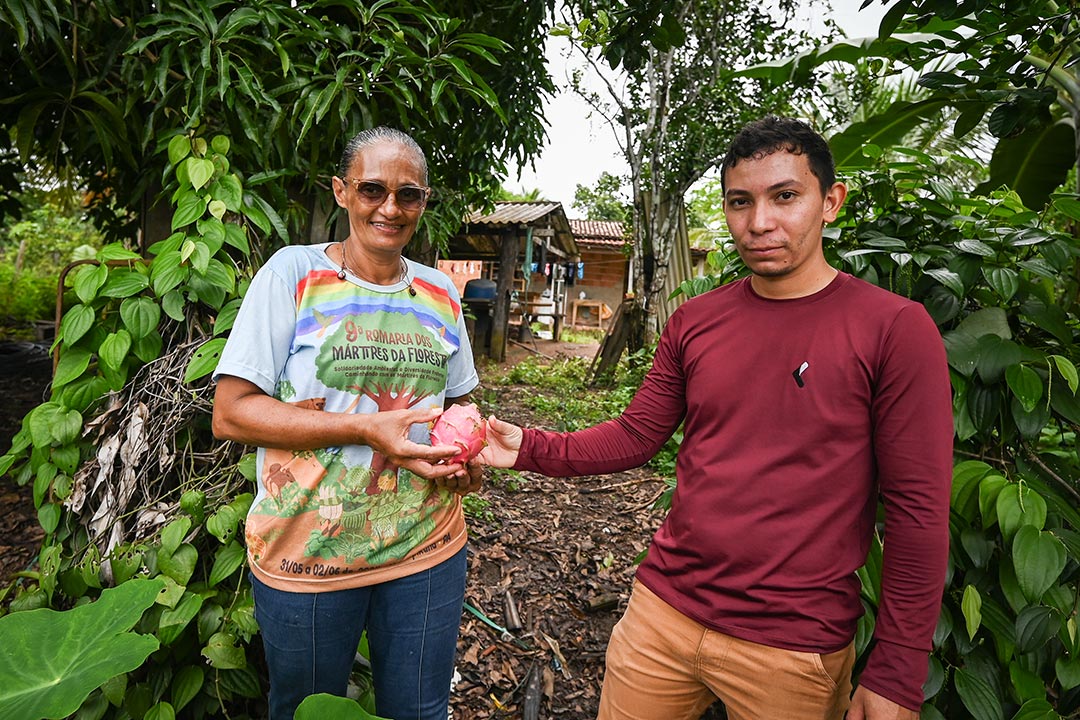
The couple has five daughters, one is an engineer, and two are agronomists. As they advanced in their studies, the plans for what to do with the plot evolved. Nilza, through a lot of effort, was making up for lost time at school. New possibilities emerged.
The family became fertile ground for dialogue with the Comissão Pastoral da Terra, which in turn was also delving into a new way of practicing agriculture: the SAF, short for sistema agroflorestal (agroforestry system).
“SAF is a food forest,” sums up Chiquinho, sitting on a wooden bench in Nilza’s kitchen. “It’s a type of production that imitates nature.”
The food forest (which brings in money)
It may seem contradictory, but the soil of the Amazon is poor. The nutrients are gone, washed away over millennia by the rains. Without tectonic activity to bring something from within the Earth to replace them, the region suffers without the forest. It is the forest that creates life and fertility, through the layering of leaves and organic matter that accumulates on the soil thanks to the vegetation, forming a layer known as leaf litter.
The forest as we know it is in part the work of human beings. Indigenous peoples selected and domesticated the plants that served them best: açaí, cassava, peach palm, cacao, and guarana to name just a few examples. And they left standing the varieties that didn’t have as much practical use. They did not treat them as “pests.”
Management relied on diversity. On the collaboration between species. “It’s the logic of syntropy, the opposite of entropy,” begins Chiquinho. “In entropy, there is a kind of competition to see who is better. In syntropy, there isn’t.” The most interesting and recent studies on the plant world point to the same idea. According to these findings, plants, along with the fungi and bacteria present in the soil, collaborate with one another. They are part of a network. Without one, the others suffer.
Income is at the core of CPT’s message. “The Amazon is a great SAF. But with farmers, it doesn’t work if we only talk about the forest. The forest, for us here, may not have much value. But if you say, ‘It’s a food forest that’s going to bring in money’… people start to see it differently,” says Chiquinho.
Açaí and cacao have been the CPT team’s entry point for dialogue with farmers. But sometimes adaptation is necessary. Such was the case with Nilza’s family.
Pedro, the union president’s partner, resisted at first. He became more open after Chiquinho introduced him to stingless bees. “They work for us, right?” observes Pedro, opening a box with a swarm of healthy bees, from which he removes honeycombs for the visitors to taste. The farmer still resists the SAF, but little by little, the family is trying to convince him to embrace the idea.


Beekeeping has become Pedro’s pride and joy; the novelty was introduced by Chiquinho. Photos: Cícero Pedrosa Neto / O Joio e O Trigo
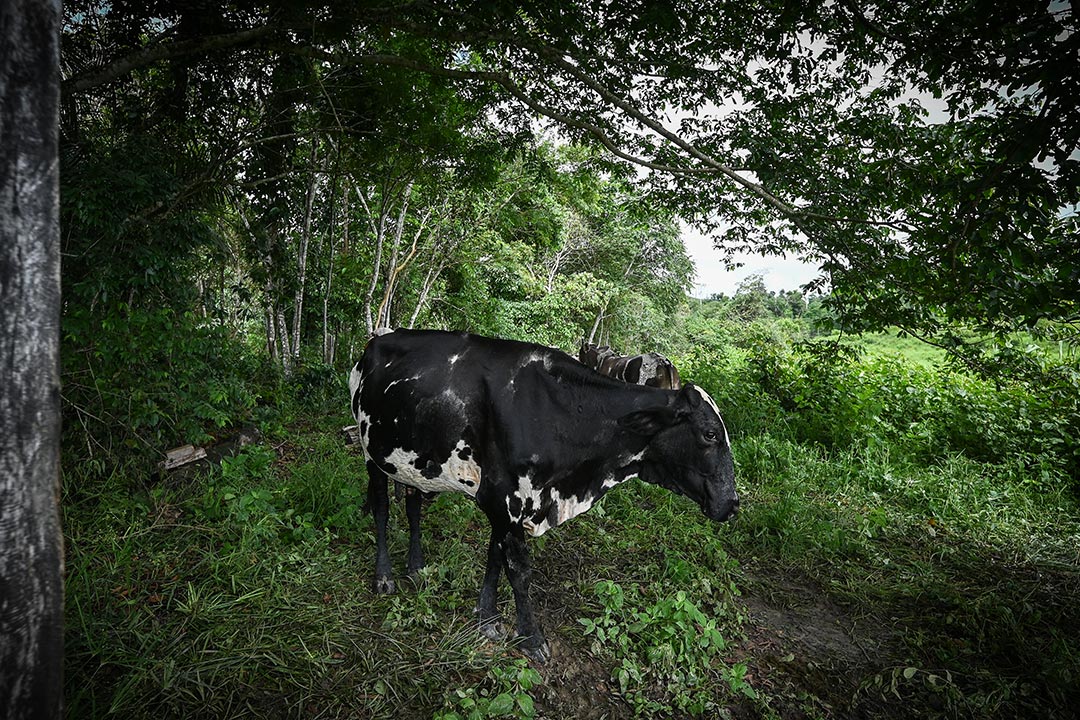
After lunch, we pass through the middle of the pasture where the family’s cows and oxen live, heading toward the preserved area of the plot. The boundary between one space and the other feels like a portal to another world. In the forest, the temperature drops. The mooing of the cow fades. The cacophony of countless creatures, such as insects, birds, and monkeys, takes over.
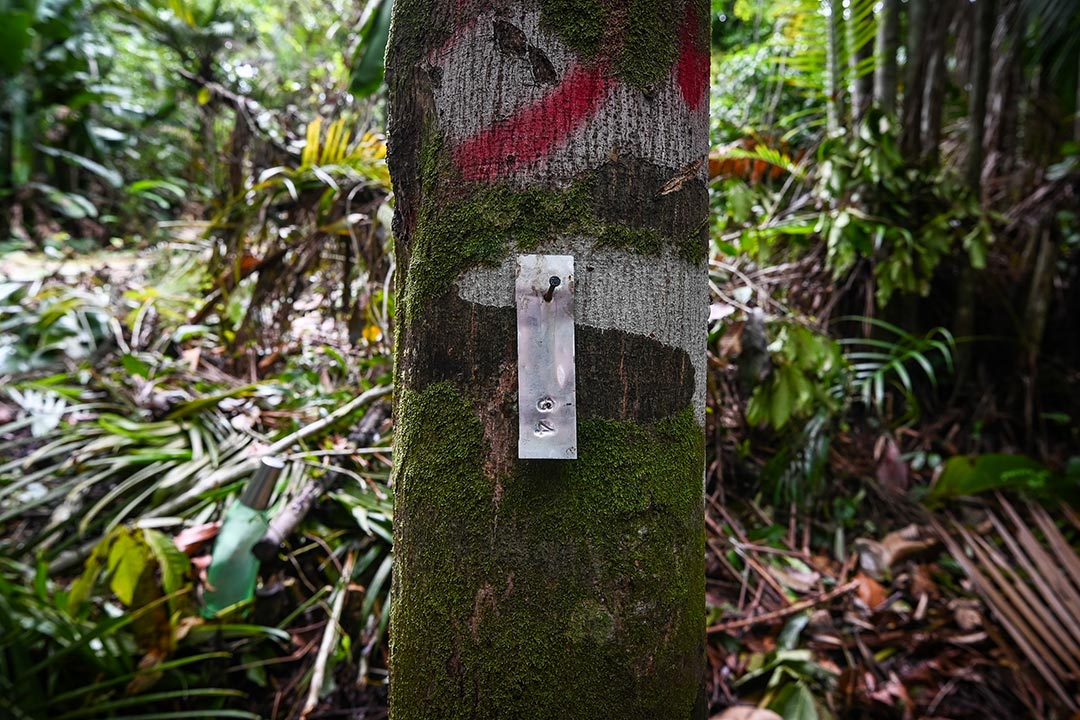
The couple, with the support of the CPT and also Embrapa – Empresa Brasileira de Pesquisa Agropecuária – (Brazilian Agricultural Research Corporation), has been dedicated to the management of native plants present on the plot, such as copaíba, andiroba, bacaba, and açaí. The management consists of ensuring sufficient light and nutrients for the plants to increase productivity. In the case of açaí, for example, some leaves are removed from the palm.
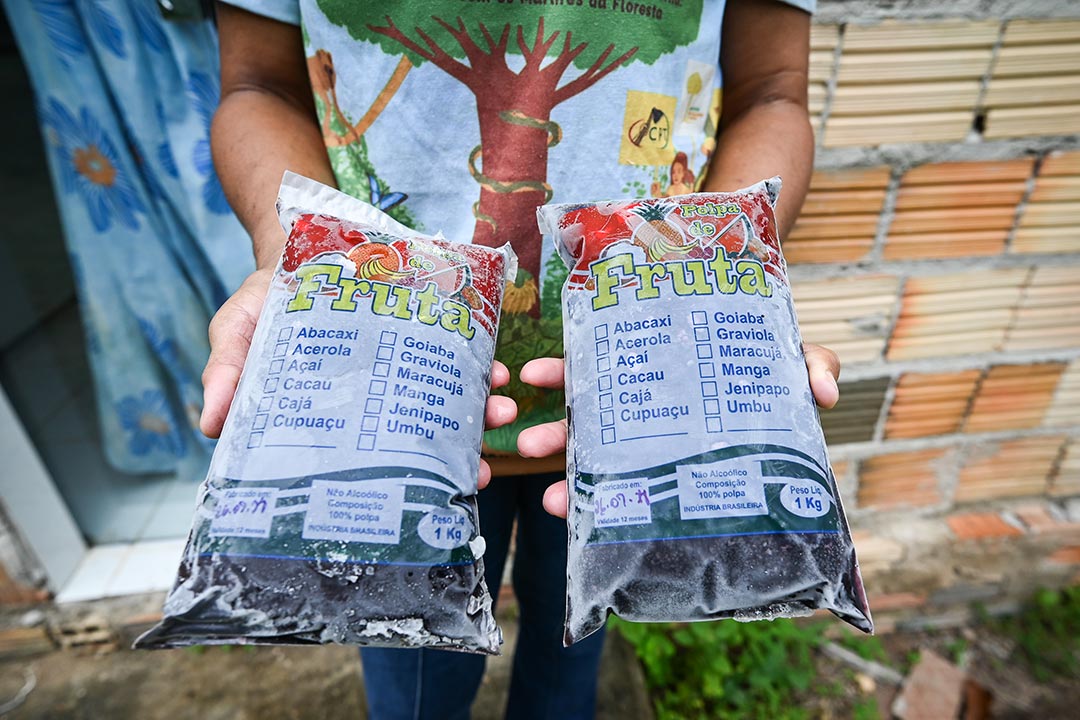
Today, the income from this area comes entirely from açaí. Nilza even built a small house to process the fruit, which would increase the revenue generated from it. But she has not yet obtained the sanitary certification necessary to sell the pulp to the local market.
“Our biggest bottleneck is this: distribution,” she says. “I tried to get a seal to sell within the municipality, but it’s difficult, there’s so much red tape… It wears you down. I couldn’t get certified.” The product has been sold to acquaintances. “They come, buy one or two [pulp packs]. It would be better to produce in larger quantities,” she notes.
In search of the neighbors
One way forward would be to coordinate with more people in Praialta Piranheira. Helping each other. Ultimately, perhaps forming a cooperative like Maria and Zé Cláudio did in the past. But first, the idea of SAF needs to be introduced to the settlers. That is the CPT team’s goal. That is why the pickup truck’s bed is loaded. We set off for the first visit of the day.
Josenilson Pereira is 47 years old and has lived off the land for as long as he can remember. Together with his wife, Geni Viana de Souza, 44, he lives on a 12-acre plot in Praialta Piranheira. But things are not going very well. The family’s main income comes from the daily wages Josenilson earns working for other producers. Their plot is focused on cattle raising, but the couple owns only four cows.
As is customary on the farm, they raise pigs and chickens. They have a small vegetable garden. This provides subsistence for them and the two of their four children who still live at home. There isn’t much left over.
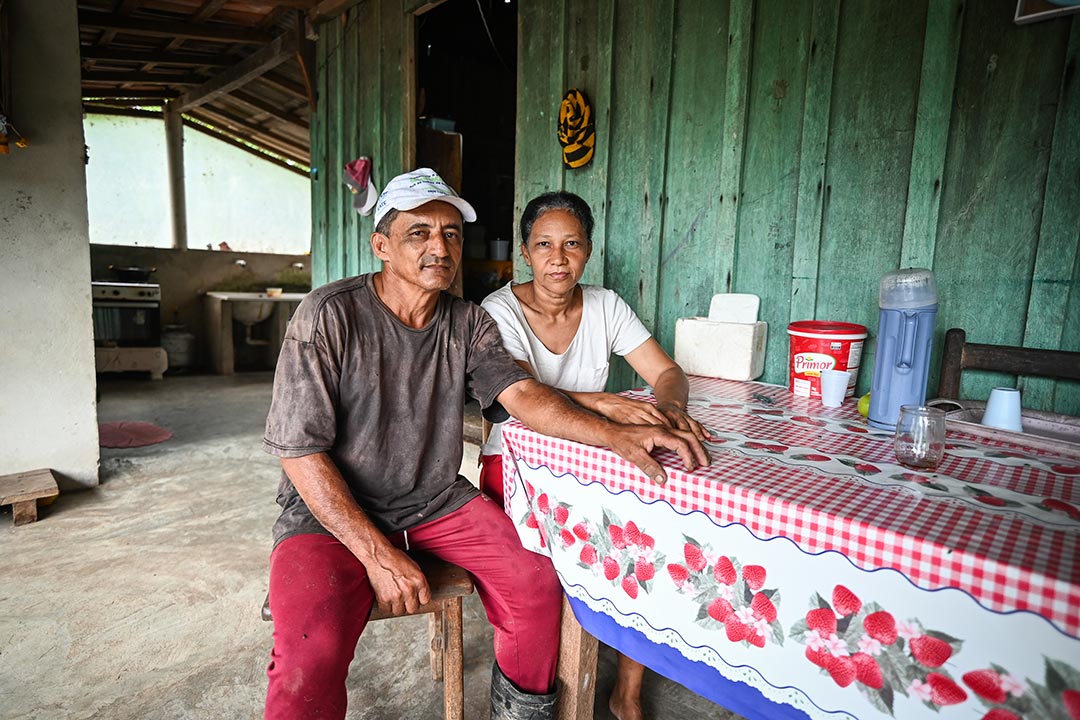
As soon as we arrive, Nilson (as everyone calls him) starts asking questions about planting. Weeks earlier, he had obtained açaí seeds and a banana seedling. He planted them, but it didn’t work. “I think I left the soil too loose and, because of the rainy season, water collected at the base of the banana seedling and it rotted,” he explains to Lucas and Chiquinho.
I keep thinking about how important it is to have some kind of technical assistance. And also, how difficult and uncertain it must be to change activities. From cattle to agriculture. This is the leap Nilson is about to take.
He had already expressed this desire in a meeting convened by the union, which included the participation of the CPT. Now is the “moment of truth”. The conversation lasts an hour. For the agents of the Comissão Pastoral da Terra, now responsible for donating seeds and seedlings, as well as providing technical assistance, it is important that Nilson commit to certain goals.
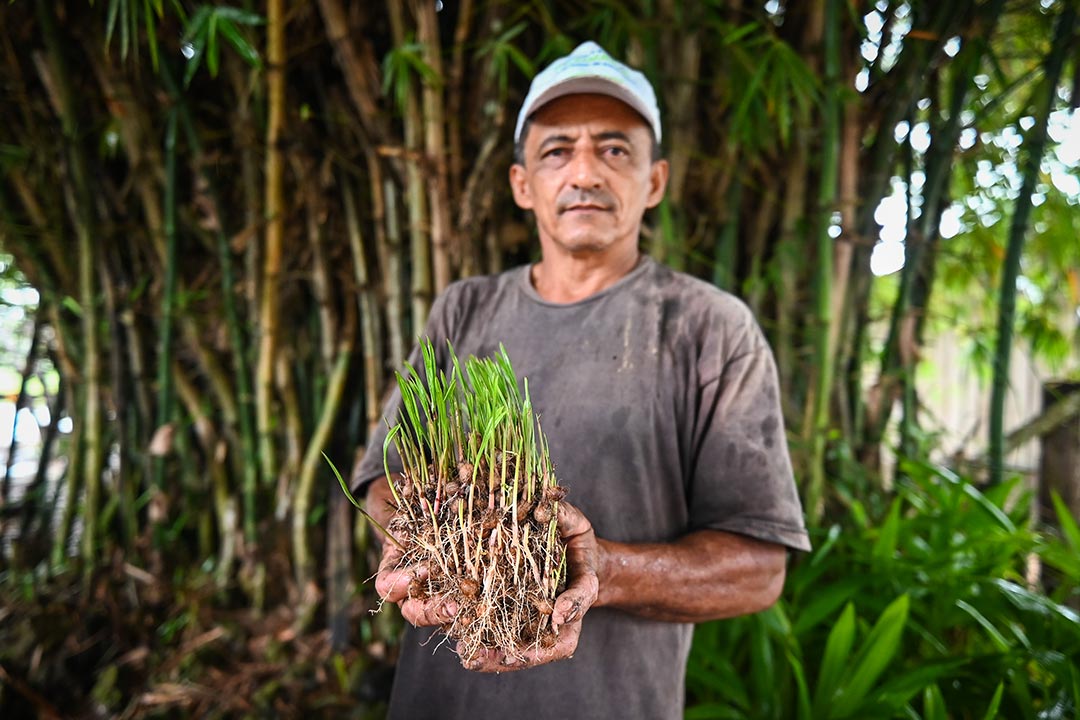
One hundred and fifty açaí seedlings were set aside for him to start a SAF, or “food forest.” They arrive at the planting site. The idea is to take advantage of the rainy season, which runs from November to April, so that the plants can establish themselves well enough in the soil to survive the dry period (which has not been easy). In May, the CPT would bring cacao seeds. The two varieties would be a beginning, a new horizon of income.
At the end of an hour of conversation, a decision is reached.
“Do you have the guts? Are you in?” asks Chiquinho.
“I’m in all the way,” replies Nilson.
The Comissão Pastoral da Terra project operates through reciprocal arrangements. Verbal agreements. Commitments. On the front lines, lots of conversations with the farmers. Periodic visits to monitor progress. Behind the scenes, a web of partnerships: with the Secretaria de Agricultura de Marabá (Marabá Agriculture Department), which provides most of the seedlings; with the Instituto Florestal e da Biodiversidade do Pará (Pará Institute of Forests and Biodiversity) (Ideflor), which provides the seeds; with rural workers’ unions, such as the one in Nova Ipixuna.
We leave Nilson and Geni’s house heading to the second visit of the day. We are welcomed at the home of Lindiomar de Oliveira Costa, 65 years old. We sit on a large, renovated veranda. The hostess settles into a rocking chair and looks curiously at all of us. It doesn’t take long for her to start telling stories.
She talks about her childhood in Nova Canaã, in Bahia. She says she lost her mother at 11 and became responsible for raising her seven siblings. How she moved to Pará, got married, and arrived at Praialta Piranheira in 1991. Two years later, they were already raising cattle, which is an activity that still involves the whole family, but her: she grew tired of it.
“I have a plan to sell the livestock,” she confides. She has 32 heads. “In the past three years, we’ve already spent around R$ 40,000 here. We spend on the girico (a kind of tractor), on grass, on pesticides, on the juquira brush cutter [low scrub]; on everything.” With feed, Dona Nega continues, it’s about R$ 3,000 per month in the summer, when it doesn’t rain. “So the cattle won’t starve.”
But her passion, she confesses, is cassava. “Until last year, I planted a lot of cassava. Then I sold a lot of it at the market. It was flour, it was starch, it was cookies, it was everything.” Her grandchildren and children forbade her from working in the fields. “Because this leg here, it swells, you know?” she points to her left leg.
Since then, everything has stopped. “I am the main post, the forked beam, and the ridge of the house,” she says. Later, I have to look up these words in the dictionary. They all refer to fundamental parts of a building.


Dona Nega and Geuza talk about the possibility of managing a preserved area on the farmer’s plot, starting the SAF there. In detail, Dona Nega. Photos: Cícero Pedrosa Neto/O Joio e O Trigo
“But do you want to change? Do you want to stay on the land?” asks Geuza.
“I have a house in town, but my life is here,” replies Dona Nega.
“You want to change. But it’s very important that the family be part of this change. Because if the drive is only yours… It’s complicated. This is not to discourage you, that’s not it. We’re here to explain what it is, how it works. If someone is on board, we’ll be with them.”
Behind the dialogue lies an increasingly common dilemma in rural areas, but particularly dramatic in settlements. The generations that conquered the land are aging. Conditions are harsh. The younger ones are not necessarily willing to deal with them, especially since they often lack the memory of a time when there wasn’t a piece of land to call their own. This shouldn’t be a problem faced individually, but rather at the level of public policy. Yet that is what happens.
The conversation continues.
“These açaí seedlings… how does it work? Do we pay for them?” asks Dona Nega.
It was the cue Chiquinho needed.
“We’re here to bring a service proposal. It’s not a quick service proposal, something you do and get immediate returns. We’re concerned about the world. We’re concerned about life. We’re concerned about food production,” begins the CPT agent.
He explains what a food forest is. That it’s possible to plant several species together. He says the agents will provide seedlings, seeds, and training.
“The idea is to start with one hectare. In one hectare, you can put one head of cattle per year. In this hectare, there won’t be any cattle. It will be fenced. And you can plant whatever you like inside,” Chiquinho continues. “Cassava, cacao, cupuaçu, andiroba…”
In the end, they agree that it would be possible to start the SAF in a section of native forest on the plot. She takes us to see it.
Still, everything depends on the family being on board.
“I don’t tolerate slackers. My grandson lives over there, and my daughter-in-law too. She’s eager, you know?” she assures.
We go down precisely to the area where her grandson lives, from where there is a clear view of the more distant section of native forest. The sun is setting. And the visit ends without a conclusive outcome. Open, just like the fate of the land throughout the entire settlement.